Marisa Groenestege
Driving Sustainability in the Bioeconomy
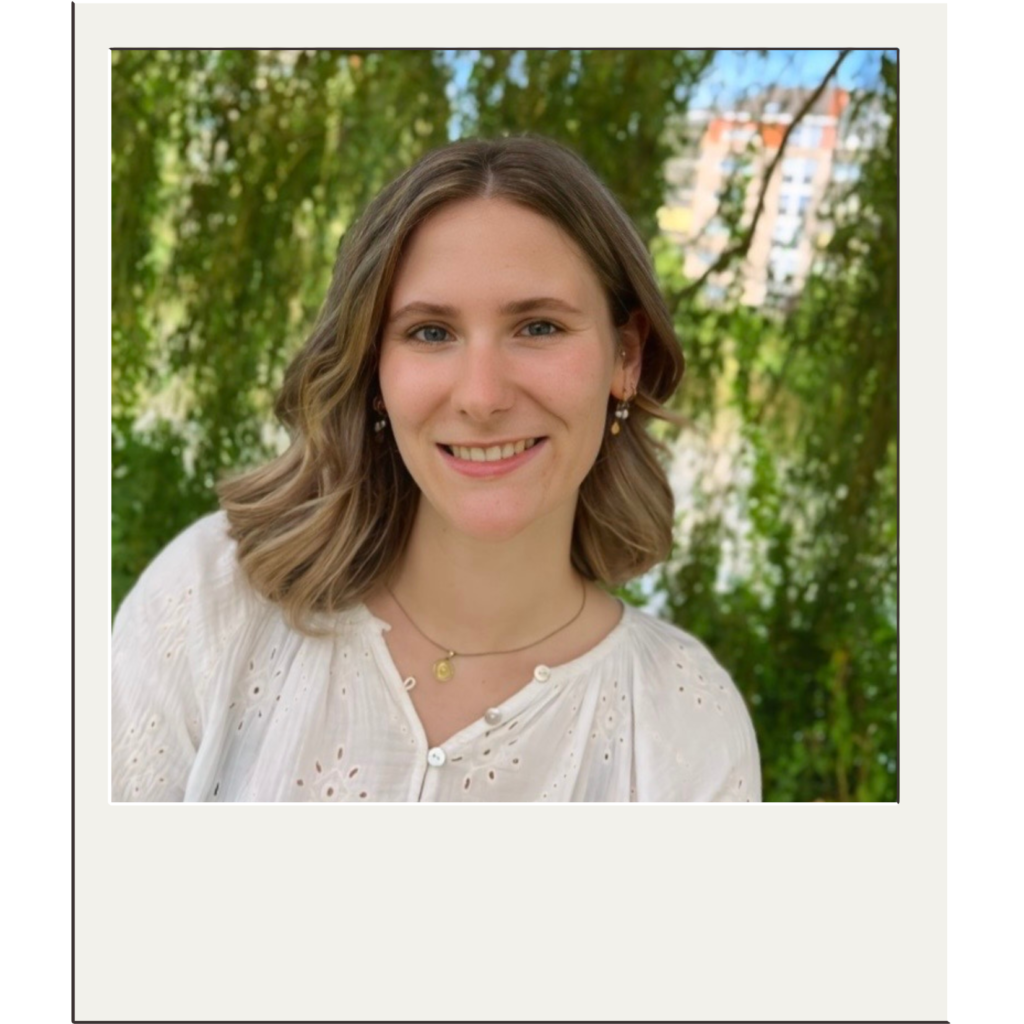
Marisa Groenestege, a researcher from the Netherlands, grew up on a farm where she developed a strong interest in agriculture and its role in the environment. This sparked her curiosity about sustainable practices related to agriculture, leading her to pursue a career in the bioeconomy. Since the beginning of 2025, she has been doing her research in multi-criteria sustainability assessment of innovative biomass supply systems (thesis 5.3) at the University of Hohenheim.
An International Education in Agriculture and Policy
Marisa’s academic journey reflects her global mindset. She earned a degree in Agriculture and Agribusiness, studying in both the Netherlands and Canada. She then broadened her experience with an internship at the Dutch Embassy in Poland, where she gained insights into agricultural policy at an international level.
Eager to deepen her knowledge, she pursued an Erasmus Mundus double master’s degree in Agricultural, Food, and Environmental Policy Analysis (AFEPA). This took her to Università Cattolica del Sacro Cuore in Italy and the University of Bonn in Germany, where she explored the policies shaping sustainable food systems.
Turning Knowledge into Impact: Work in the Bioeconomy
For the past few years, Marisa has worked as a bioeconomy consultant at BTG Biomass Technology Group in the Netherlands. Her work has focused on various topics within the bioeconomy, including:
✔ Regional bioeconomy development – supporting local bioeconomy initiatives
✔ Bio-based and sustainability certifications – ensuring products meet high sustainability standards
✔ Life Cycle Assessments (LCAs) – improving methods for assessing the environmental impact of bio-based products
✔ Bioeconomy education – helping promote knowledge-sharing and awareness
Through these projects, she has contributed to EU research efforts aimed at improving the efficiency and impact of the bioeconomy.
Why the Bioeconomy?
For Marisa, the bioeconomy is more than just a field of study; it’s a solution to major global challenges. By using biological resources efficiently, it promotes a circular economy where waste is minimized, and sustainability is maximized. It also connects economic growth with environmental and social responsibility, making it a powerful tool for long-term change.
Committed to Sustainable Innovation
Marisa is particularly interested in sustainability indicators—tools that measure the environmental, social, and economic impact of bio-based systems. She believes that better assessment methods will help create bio-based value chains that are truly sustainable and fair for everyone.
Her motivation for research comes from a desire to find real solutions to the environmental problems she encountered during her studies and work. By focusing on sustainability, she hopes to drive positive change in the bioeconomy.
Looking Ahead: A Future in Sustainable Development
Marisa describes herself in three words: curious, passionate, and adventurous. These qualities drive her both professionally and personally. She enjoys reading, traveling, and exploring different cultures through cooking—showing her love for new experiences and global perspectives.
A Song That Defines Her Work Ethic
If Marisa had to choose a song that represents her approach to work, it would be “Don’t Stop Me Now” by Queen. The song’s energy and positivity reflect her determination, enthusiasm, and drive to push forward and make a difference.